Who Is Web-Stork Right for — and Who Isn’t? How to Choose a Digital Agency for Your Business
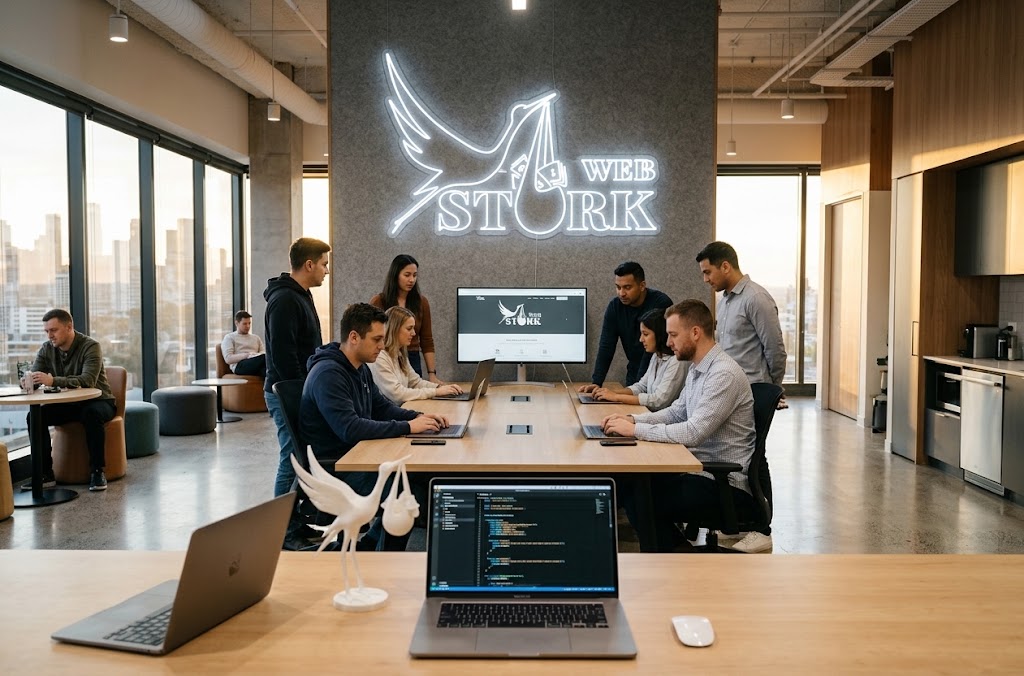
Choosing a digital agency is about more than finding a team to build a website or set up advertising. It is important to find a partner that understands your business objectives, recommends the right tools, and can support you at your company’s current stage of development.
Some companies need a complete brand launch from scratch, while others need a new website, better Google rankings, or consistent social media management. Some businesses are looking for a contractor for one specific task, while others want to outsource several areas of digital marketing to an external team.
Web-Stork works on a range of digital projects, from naming and branding to design, website development, SEO, advertising, social media marketing (SMM), copywriting, content management, and technical support. This allows companies to choose individual services or combine several areas according to their needs.
However, a broad range of digital services does not mean that the agency is the right fit for every business. To decide whether working together makes sense, it is worth considering what a digital partner can help you achieve and when another type of contractor may be a better choice.
What Business Challenges Can Web-Stork Help Solve?
A digital agency can be useful at different stages of a company’s development, from building a brand to improving existing digital channels.
Launching a new business or brand
When a company is entering the market, it needs more than just a logo and a website. It needs a clear value proposition, well-defined positioning, and consistent communication with potential customers.
This may involve naming, branding, visual identity development, a brand book, design, and website creation. Copywriting can help communicate the product’s value, while SEO and advertising campaigns can help attract the first visitors.
Not every startup needs all these services at once. If the business model is still being tested, it may be more sensible to start with the minimum set of tools required and expand it after gathering initial evidence of demand.
Growing an established business
A business may have a stable customer base but still face challenges with its digital presence. For example, its website may be outdated, organic traffic may be insufficient, advertising campaigns may generate fewer enquiries than expected, or content may be published inconsistently.
In this situation, a complete marketing relaunch is not always necessary. Sometimes a technical audit, page updates, user experience improvements, or adjustments to the advertising strategy are enough.
Before choosing services, identify what is limiting the company’s growth: low brand awareness, a low website conversion rate, irrelevant traffic, a weak value proposition, or problems handling enquiries.
Entering a new market
Companies planning to operate in the Netherlands or other European countries may need to adapt their brand, website, and marketing communications for a new audience.
Such a project may include content localisation, search demand research, SEO, new landing pages, or advertising campaigns targeted at a specific region.
Entering a new market requires more than translating a website word for word. Local terminology, consumer behaviour, the competitive landscape, and decision-making patterns all need to be considered.
Improving an existing website’s performance
If a website is already live but does not help the business achieve its goals, it is worth identifying the reason.
Visitors may find it difficult to locate the information they need. The website may load slowly, have a poor mobile experience, or fail to explain why customers should choose this particular company.
In these cases, UI/UX design, technical optimisation, development, copywriting, and SEO may be relevant.
However, a redesign or technical update alone does not guarantee increased sales. Decisions should be based on website analysis, user behaviour, and conversion data.
What Services Can Web-Stork Offer Your Business?
One advantage of working with a digital agency is the ability to coordinate different parts of a company’s digital presence. This is especially important when branding, design, development, and marketing need to work together as one system.
Naming, branding, and brand books
Naming helps find a name for a company, product, or service. The process should take into account positioning, target audience, competitors, linguistic context, and potential use of the name in different markets.
Branding creates a consistent image for a company and helps distinguish it from competitors. A brand book defines the rules for using the visual identity, helping keep communication consistent across the website, social media, and other digital channels.
These services may be relevant to a new business, a company repositioning itself, or a brand whose visual materials have become outdated.
When entering the European market, it is also worth checking linguistic associations, domain availability, and potential trademark conflicts. Checking a domain does not replace a legal review of the name.
Website design and development
A website is often one of the main points of contact between a business and potential customers. It can present services, explain the company’s advantages, showcase case studies, and help visitors submit enquiries or place orders.
Web design and UI/UX help make a website clear, consistent, and easy to use. Development provides the technical implementation of the required functionality.
Depending on the business need, the project may involve a corporate website, a service website, an online store, or improvements to an existing platform.
A website does not always need to be built from scratch. If the current system meets the company’s needs, targeted improvements may be more cost-effective than a complete replacement.
SEO and digital advertising
SEO helps improve a website’s organic visibility in search engines and attract users looking for relevant products or services.
Advertising, including Google Ads campaigns, can help test demand more quickly and direct audiences to specific offers.
These tools serve different purposes and should be selected according to the company’s goals. SEO usually takes time to deliver results, while paid advertising performance depends on budget, campaign settings, competition, and landing-page quality.
Neither channel can guarantee a specific number of sales under all circumstances. Results also depend on the product, price, demand, and how the company handles incoming enquiries.
Social media marketing, copywriting, and content management
Social media and content help companies communicate with their audiences, explain their value, and demonstrate expertise.
Copywriting may include website copy, landing pages, articles, and other digital materials. Content management ensures that content is updated and published regularly according to agreed processes.
These services are particularly useful for businesses with a lot of information about their products and services but insufficient internal resources to manage it systematically.
At the same time, each channel should match the behaviour of the target audience. Not every company needs to maintain an active presence on every social network. In some cases, SEO may be the priority; in others, advertising, expert content, or high-quality service pages may matter more.
Technical support and website development
A website launch does not necessarily mark the end of the work. The site may need ongoing technical maintenance, component updates, bug fixes, and new features.
Technical support suits companies that do not want to manage all technical processes themselves or do not have an in-house developer.
Before starting work together, clarify which tasks are included in the support service, how urgent requests are handled, who is responsible for backups, and which changes are billed separately.
Which Companies Should Consider Working with Web-Stork?
Small and medium-sized businesses
Smaller companies often do not have dedicated specialists for every area of marketing. The owner or a small team may be responsible for sales, customer service, the website, and communications at the same time.
Working with an external digital partner makes it possible to delegate some specialist tasks to a professional team.
For example, a local company might start with website optimisation and local SEO, then add advertising campaigns and content later. This approach helps allocate the budget according to priorities.
Startups and entrepreneurs launching a new product
For startups, it is important to present a product to potential customers quickly and clearly.
A digital partner can help develop the visual identity, build a website, prepare content, and set up the first audience acquisition channels.
At an early stage, it is sensible to avoid unnecessary spending on tools whose effectiveness has not yet been tested. Start by identifying what is needed to enter the market and validate demand.
Companies that already have a website but receive too few enquiries
If visitors reach the website but do not contact the company, the problem may not be traffic alone.
Possible causes include unclear messaging, complicated navigation, insufficient trust, confusing terms of cooperation, or technical errors.
In this situation, it is useful to begin by analysing the current website and traffic sources. The findings can help determine whether changes are needed to design, content, SEO, advertising, or technical implementation.
Companies planning to scale
As a business grows, the number of digital tasks increases: website updates, new pages, expanded content, advertising campaigns, and technical changes.
If these processes are not coordinated, the company may spend resources on disconnected activities without clear priorities.
Working with a digital partner can help coordinate different areas according to agreed goals and a development plan.
Companies entering the European market
Entering a new market often requires a review of the website, positioning, content, and customer acquisition methods.
Companies may need localisation of digital materials, SEO for a new-language audience, advertising campaigns, or adaptations to their visual communication.
It is important to assess not only whether the existing website can be translated, but also whether the offer meets the needs of the new market.
Who Might Web-Stork Not Be Right For?
Choosing an agency should start with defining the task. If a business needs a service outside a contractor’s area of expertise, it is better to find a suitable provider from the outset.
Companies that need offline marketing only
Web-Stork specialises in digital services, so it is not the right contractor for projects consisting exclusively of offline marketing activities.
For example, if a company needs to organise an in-person event, place outdoor advertising, print flyers, or run a promotion at a physical location, a specialised agency would be a more appropriate choice.
However, if a project combines offline and online activities, Web-Stork may be considered for the digital part, provided it falls within the agency’s available services.
Companies expecting guaranteed results regardless of market conditions
In digital marketing, it is not possible to responsibly guarantee a specific number of sales or top Google rankings regardless of budget, competition, and other factors.
If a company expects guaranteed results without analysing its product, market, website, and advertising opportunities, those expectations should be reconsidered before work begins.
Instead, it is better to define measurable goals, agree on performance indicators, and evaluate results regularly using data.
Companies that are not ready to participate in the process
Even when most operational tasks are outsourced to an agency, the client remains an important participant in the project.
The team may need product information, access credentials, approval of materials, feedback, and decisions about priorities.
If the company cannot provide the necessary communication, this may affect delivery times and the quality of the work.
Companies that need services outside digital specialisation
If the main task involves manufacturing physical products, organising events, or other offline processes, it is worth looking for a contractor with the relevant specialisation.
This does not mean that companies with broader needs cannot work with Web-Stork. If a project includes website development, SEO, advertising, content, or other digital tasks, those areas can be considered separately.
Do You Need to Buy All Services from One Digital Agency?
No. The right choice depends on the resources the company already has and the problem it needs to solve.
If a business only needs an SEO audit, there is no need to commission branding, social media marketing, and a new website at the same time.
If a company is launching a new brand, however, a coordinated approach may make sense. For example, positioning should align with website copy, the design should reflect the brand’s character, and advertising messages should match the actual customer offer.
Working with one partner can simplify coordination. However, a full-service arrangement is not always the best solution for every business.
Before starting, define priorities, budget, timelines, and the specific deliverables expected at the end of the project.
How Can You Identify the Services Your Business Actually Needs?
Before contacting a digital agency, try to describe the problem you want to solve.
If you are launching a new business, you may need to build a brand and create a website.
If you already have a website but it is barely visible on Google, review its technical condition, page structure, and SEO.
If visitors arrive but do not submit enquiries, investigate traffic quality, the offer, user experience, and the conversion process.
If your company publishes content regularly but lacks a systematic approach, a content strategy, copywriting, and content management may help.
If the website is unstable or needs frequent changes, consider technical support.
You do not need to know the exact name of the service in advance. It is enough to describe the current situation, business goals, and the challenges the company faces.
Based on that information, you can identify the highest-priority tasks and decide which digital tools are appropriate.
What Should You Look for When Choosing a Digital Agency?
Beyond the list of services, it is important to assess the team’s approach to work.
Make sure the agency understands your business goals, can explain its proposed solution, and defines a clear scope of work.
It is also worth clarifying who will handle communication, how changes will be approved, which metrics will be used to assess results, and what happens after the project launches.
For web projects, define ownership and access arrangements for the website, domain, hosting, code, design, and content in advance, along with the process for handing over access credentials.
If the company processes users’ personal data in the European Union, applicable GDPR requirements and other relevant rules must be considered. Specific obligations depend on the nature of the project and the roles of the parties involved.
The best contractor is not necessarily the one that offers the most services. What matters more is whether its expertise, processes, and experience match your business’s specific needs.
Conclusion
Web-Stork is worth considering for companies that need help developing their digital presence, from naming, branding, and website development to SEO, advertising, social media marketing, copywriting, content management, and technical support.
The agency may be useful for startups, small and medium-sized businesses, local companies, online stores, and businesses planning to enter new markets.
At the same time, not every business needs a full range of services. It is more practical to start with a specific task, set priorities, and develop digital channels gradually according to the company’s needs.
If you are unsure which digital services your company needs, explore Web-Stork’s services and contact the team to discuss your goals, challenges, and possible ways of working together.


Why Is Your Website Not Generating Leads? 10 Common Reasons and How to Fix Them

Why Is Your Website Loading Slowly and How Can You Improve Its Performance?

Does Your Business Need a New Website, or Is Improving the Existing One Enough?

A Beautiful Website ≠ A Profitable Website: What Actually Drives Online Sales
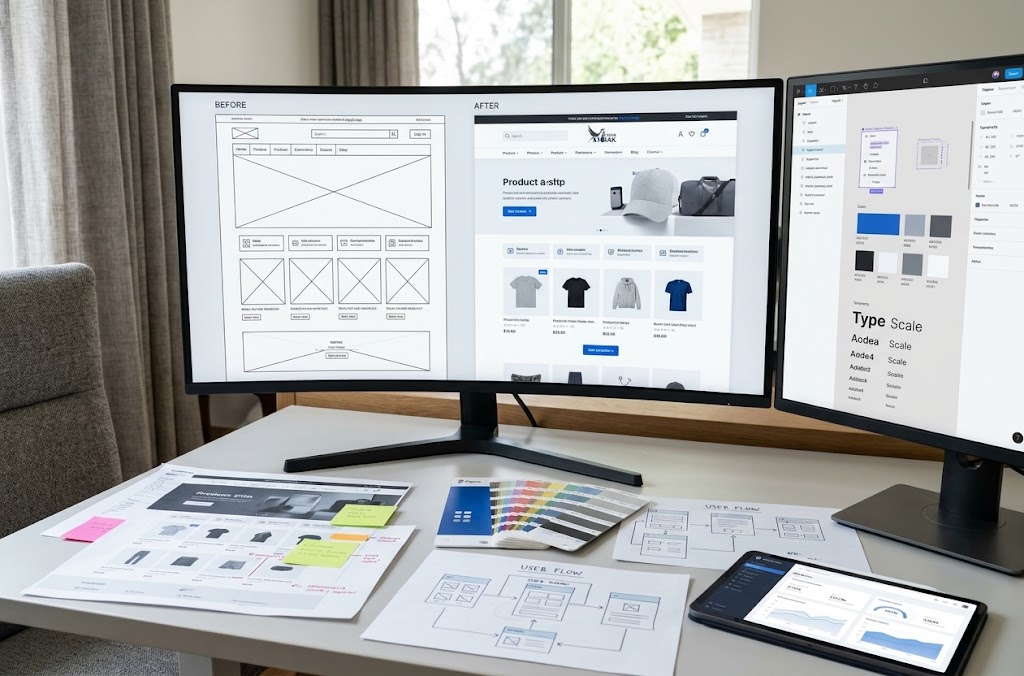
Should You Redesign a Website That Already Ranks Well on Google?